
 News & Updates
Investing in the Future: Singapore Allocates $112 Million for Sustainable Building Innovations
📍 Islandwide
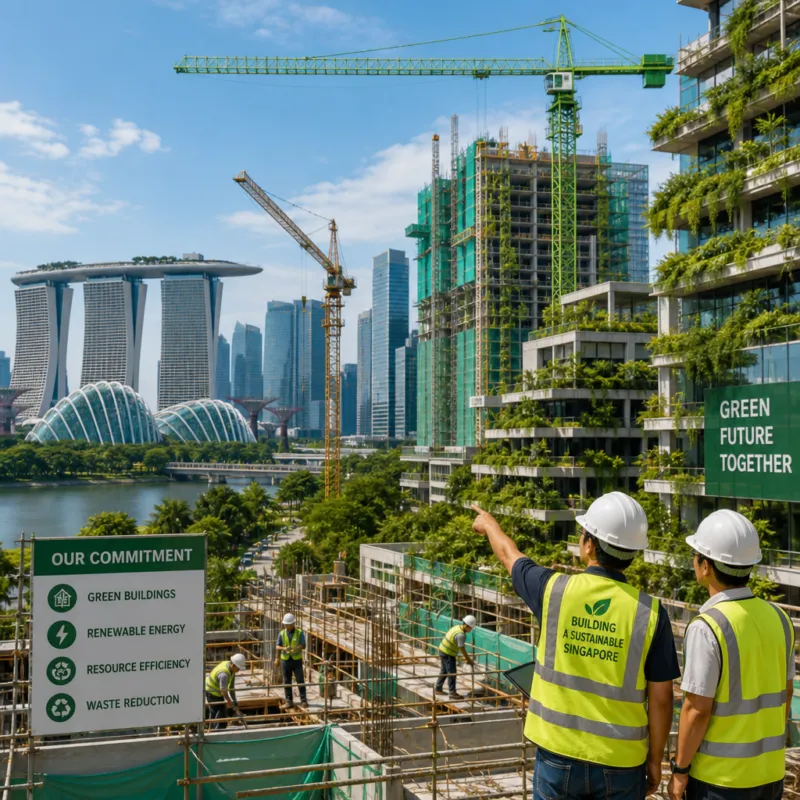
In a significant step towards sustainable urban development, Singapore has announced an investment of $112 million dedicated to advancing research and innovation in the built environment over the next five years. National Development Minister Chee Hong Tat highlighted that this funding will be channeled into various critical areas, including enhancing demolition safety, improving building maintenance practices, and reducing carbon emissions within the construction sector. This initiative is part of the broader Research, Innovation and Enterprise 2030 (RIE2030) plan, which aims to commercialize innovative solutions that can be applied both locally and internationally.
The planned investments come on the heels of another $185 million already secured under the RIE2030 framework, underscoring the government’s commitment to rejuvenating urban spaces while maintaining safety and minimizing disruptions in densely populated areas. With a focus on the aging infrastructure and the diverse uses of buildings, the initiative aims to equip building owners with better tools to assess structural health and lifecycle costs, thereby anticipating maintenance needs more effectively.
Moreover, as Singapore strives towards achieving net-zero carbon emissions by 2050, the emphasis on reducing both operational and embodied carbon is becoming increasingly crucial. The new measures include updates to the Building and Construction Authority’s (BCA) Green Mark scheme, introducing new certification tiers aimed at accelerating decarbonization efforts across the built environment. The government also plans to optimize land use by exploring underground development opportunities, which could offer innovative solutions to Singapore’s land constraints.
As a property agent, I view this initiative as a positive and necessary investment in the future of Singapore’s built environment. The focus on sustainability is not just a trend; it’s a fundamental shift in how we approach property development and management. Investors and developers who embrace these innovations will not only align with government policies but will also find themselves at a competitive advantage in a market that increasingly values sustainability. With the new regulations set to come into play, particularly the requirement for licensed site supervision firms for large projects starting in 2028, the industry will need to adapt quickly to ensure compliance.
For everyday buyers, sellers, tenants, and landlords, these developments hold tangible implications. Buyers looking for new properties will benefit from a growing stock of energy-efficient and environmentally friendly buildings, which can translate into lower utility bills and enhanced living conditions. Sellers can capitalize on the increasing demand for green buildings, potentially fetching higher prices or quicker sales for properties that meet new sustainability standards.
Tenants, particularly in commercial spaces, may find that buildings certified under the new Green Mark version 7 will offer not only a healthier work environment but also cost savings through reduced energy consumption. Landlords, on the other hand, should start preparing for the new accreditation processes and consider investing in retrofitting their existing buildings to meet the updated green standards. By doing so, they can improve the value of their properties and attract tenants who prioritize sustainability.
In conclusion, the $112 million investment in building innovation represents a shift towards a more sustainable and efficient built environment in Singapore. For all stakeholders in the property market, it’s an opportunity to engage with a changing landscape that prioritizes not only economic growth but also environmental responsibility. Keeping abreast of these developments will be essential for anyone involved in the Singapore real estate market as we move towards a greener future.
Source: The Straits Times
Based on reporting by The Straits Times ↗
Was this story useful?
Loading the stories…
01 / 06
Where this story happens
The place behind the headline, on the 3D map — with the neighbourhood's own resale numbers.
02 / 06
The story in numbers
Every figure in this story, pulled out so you can see it at a glance.
03 / 06
See it live in 3D
Open the same data on the interactive map and explore it yourself.
04 / 06
What else is around here
New launches and other stories within reach of this spot.
06 / 06
What it means for you
Turn this story into your own numbers with the free guides and tools.
Keep reading
More stories like this
News & Updates
 News & Updates
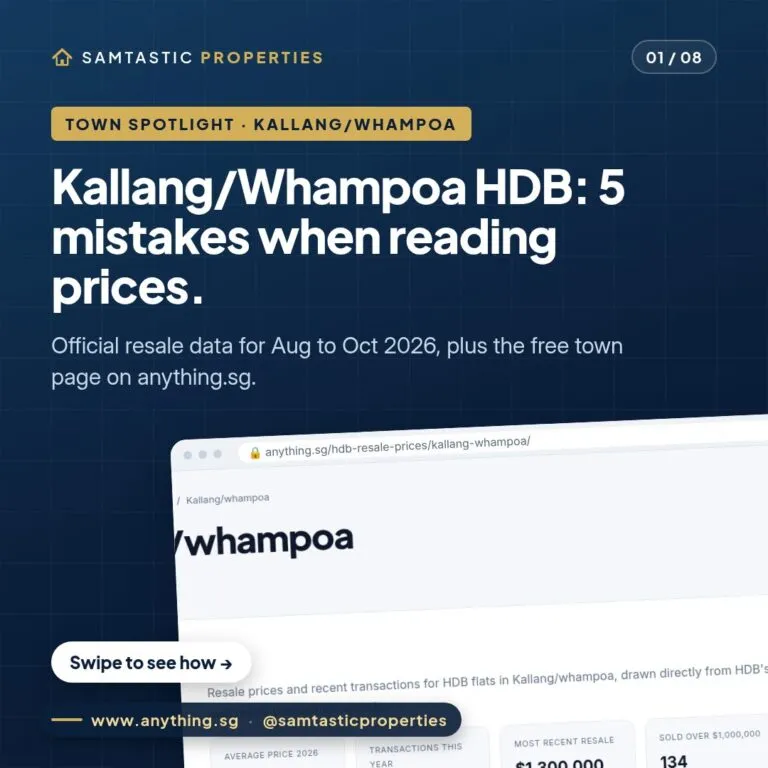
Looking at Kallang/Whampoa HDB? Avoid these 5 price-reading mistakes. 🏙️
From Aug to Oct 2026, 4-room flats there sold from $420,000 to $1,268,888. Lease left explains much of… News & Updates
Got your keys and planning a reno? Check your contractor first. 🔨
A new free page on anything.sg lists all 2,708 HDB-registered renovation contractors, searchable by name, street…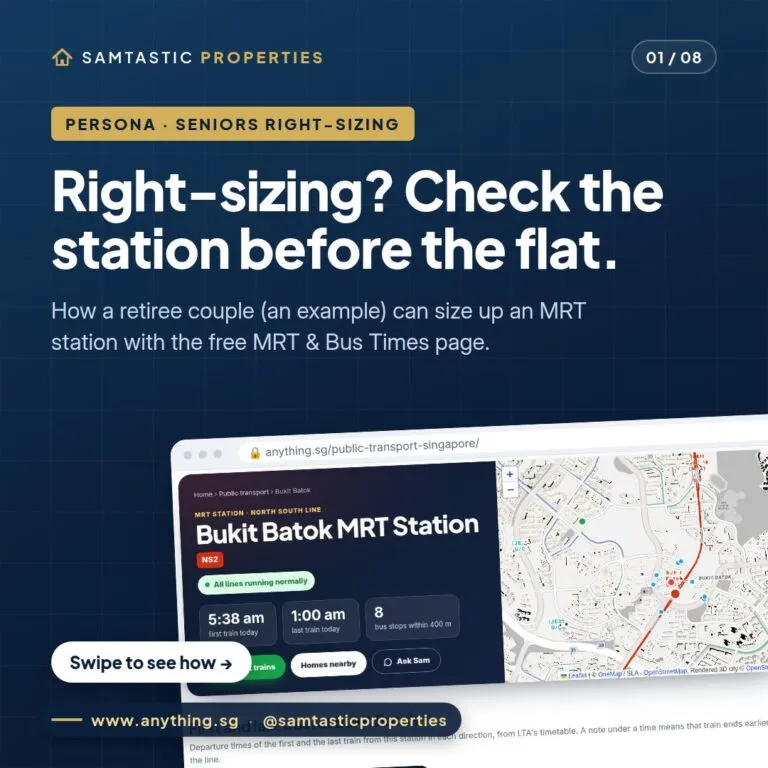 News & Updates
Right-sizing in your 60s? Check the MRT station before the flat. 🚆
The free MRT & Bus Times page shows live lift maintenance, platform crowd, buses within 400…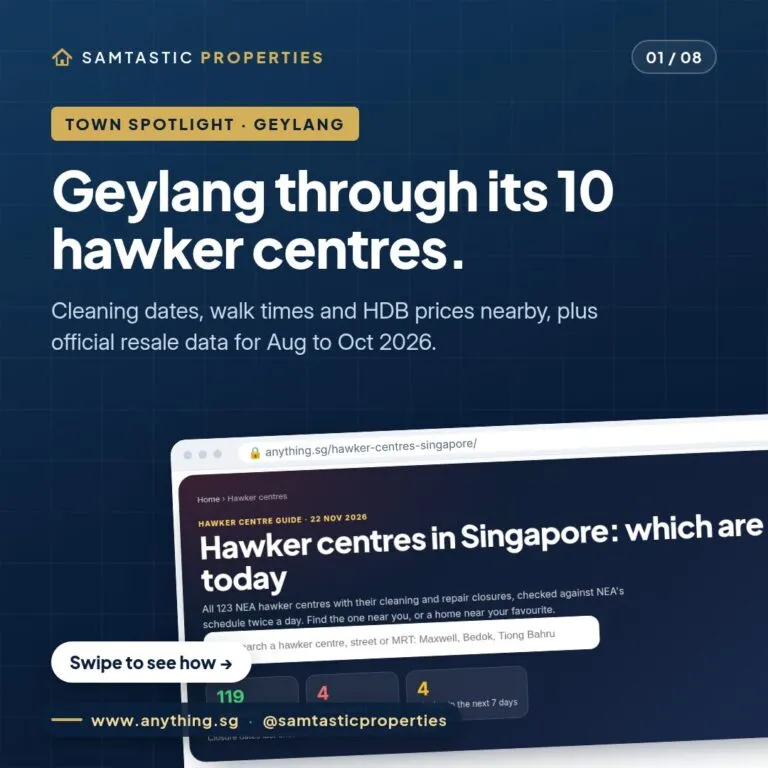 News & Updates
Love Geylang for the food? Here is the town through its hawker centres. 🍜
The free Hawker Centres page lists 10 centres in the Geylang area with their…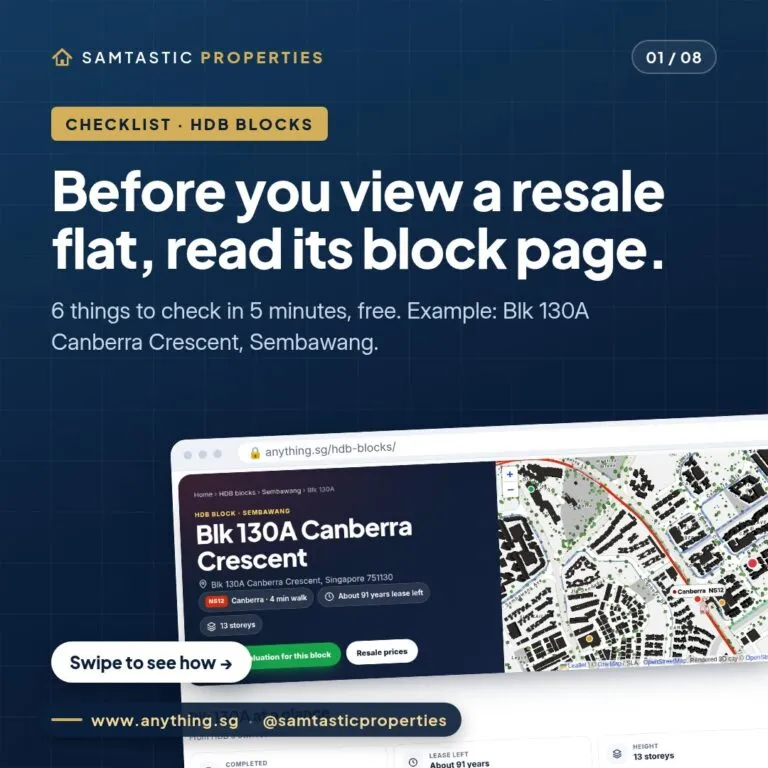 News & Updates
Viewing a resale flat this weekend? Read its block page first. 🏢
The free HDB Blocks page shows lease left, the flat mix, the median price per flat…Story locations come from each story's own data or the places it names, matched against the site's lists of new launches, HDB towns and planning areas. Neighbourhood figures are HDB resale transactions published by HDB on data.gov.sg (last 12 months) and URA caveats; new launch details are from developers' published information. News write-ups summarise the original reporting linked on each story. Your reading history, saved stories and quiz score are kept only in this browser. Nothing here is financial advice.